


Is Hoodia Safe for Weight Loss?
-
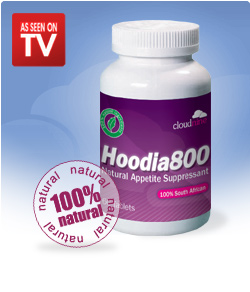
As Hoodia grows in popularity, more and more people are asking, “What are the side-effects of Hoodia?” or “Is it safe to take Hoodia for slimming?”Hoodia has only been added to the weight loss marketplace fairly recently. Although it’s been available as an appetite suppressant since 1997, it wasn’t until 2004, when it was highlighted on the Oprah Winfrey TV show, that it grew dramatically in popularity.
From the countless thousands that have taken Hoodia in those years, there have been virtually no serious side-effects reported. The Bushmen of South Africa - where Hoodia grows in the wild - have been using the Hoodia plant for centuries to help keep curb their appetites during strenuous hunting expeditions through the desert. Sometimes, during periods of lack, they had to rely on Hoodia as a staple part of their diet.
This would indicate that it’s a safe plant to take for slimming - if we take it the same way they’ve done for thousands of years
They’ve always used the whole plant, either dried or fresh, but avoiding the roots and flowers. Therefore we need to do the same, and find a product that is pure Hoodia - nothing added and nothing taken away. Adding anything to pure Hoodia is likely to disrupt its natural balance, and consequently reduce its effectiveness as an appetite suppressant.
You need to understand that because the whole plant is safe - with all its ingredients preserved - doesn’t mean that a chemical extracted from the Hoodia plant is going to be safe. The active ingredient in Hoodia is P57. But to take out that one molecule and use it on its own, is probably not such a great idea.
There are 3 areas we found in our research that are worth mentioning. These can be seen more as precautions, as opposed to side-effects:
1. Occasionally, Hoodia may reduce the thirst signals in some people, as well as the hunger signals. Now, if Hoodia had ’switched off’ the thirst signal, you wouldn’t realise you were thirsty. So it would be wise to make sure you’re drinking plenty of fluids thoughout the day.
The accepted wisdom is that adults should be drinking 2 litres of water every day. When you’re dieting, you should be drinking at least 2 litres a day. So pour yourself a 2-litre bottle of water every morning, and make sure you drink it throughout the day.
2. The second point is still a little unclear. Dr. MacLean, a leading endocrinologist at Brown Medical School, found that P57 was easily broken down by the liver. (He was injecting P57 into the brains of rats - very nice!). Yet Dr. Steelman - a slimming specialist, said he was concerned that P57 was processed by the liver, since obese people often have liver abnormalities that could compound any possible side-effects.
Two experts with differences of opinion. (Nothing new there, then!) Dr. Steelman says many obese people suffer with liver problems. MacLean says P57 is ‘easily’ broken down by the liver. It seems to make perfect sense then, if you’re suffering with obesity and/or have liver problems, it would be good to consult with your physician or healthcare provider before taking Hoodia to lose weight.
3. People with diabetes should be careful when using Hoodia. Diabetics need help with regulating their blood sugar levels. If Hoodia ‘tricks’ their brain into thinking their blood sugar levels are higher than they actually are, it could cause a problem if they don’t eat when they’re supposed to, and their blood sugar level drops too low.
Let’s just put these precautions into perspective:
Being overweight is directly linked with high blood pressure, high blood cholesterol, and resistance to insulin (a precursor to Diabetes). This set of risk factors has been termed Metabolic Syndrome X. It is thought to affect over 70 million Americans and is now a common cause of premature death and/or disability.
It seems that Hoodia could play a vital role - together with aerobic exercise and dietary changes, to fight metabolic syndrome and reduce the risk associated with any of the diseases above.
As a general precaution, pregnant or nursing women, children, and people with liver disease should not take Hoodia; or only do so under the direction of a qualified healthcare professional. And anyone using Hoodia needs to make sure they’re drinking enough water, and eating enough food for their needs.
In summary, “Is Hoodia safe to take?” Yes it is. It does seem safe to take Hoodia, judging by the current research and testimonials - with one caveat. It should be pure Hoodia, that hasn’t been changed, modified or diluted in any way